
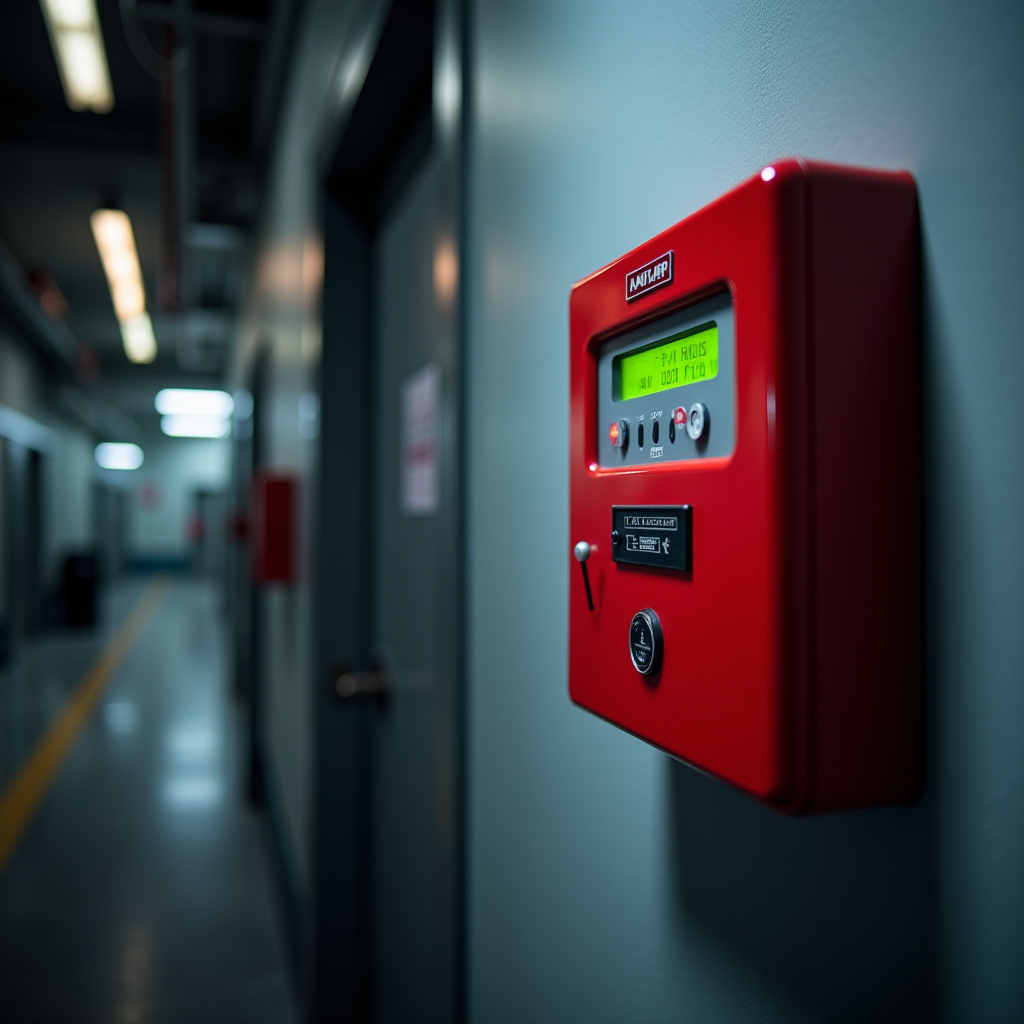
New Hampshire adopted NFPA 72 as the statewide standard for fire alarm and emergency communication systems. Most commercial building owners know this in the abstract. What they find out too late is that the same code governs how security, access control, and life safety systems must interact, and that interaction affects what you can install, where, and how it is wired.
If you are planning a security system upgrade, an access control installation, or a new fire alarm in a commercial building, you need to understand the overlap before you write the check.
What NFPA 72 actually requires in NH
NFPA 72 is the National Fire Alarm and Signaling Code. New Hampshire has incorporated it by reference into state building codes, which means compliance is not optional. The code covers:
- Fire alarm initiating and notification devices
- Emergency communication systems
- Mass notification and voice evacuation
- Integration with building management and security systems
- Pathway survivability (how wiring must be protected)
- Power supply requirements and battery backup
For most of our customers, the relevant sections are the ones about integration: how your fire alarm and your access control interact, whether your security system can lock doors during a fire alarm, and whether your cameras record during an evacuation event.
The door lock problem that stops projects
Here is the most common issue we see: a business installs new magnetic locks on all exterior doors, then discovers during the fire marshal inspection that the doors must unlock automatically when the fire alarm activates. The locks were wired to a standalone access control system with no fire alarm input. Now the system needs to be rewired, a fire alarm relay added, and the doors retested.
The fix is straightforward if planned from the start, expensive if discovered during final inspection. We always ask about NFPA 72 integration before we quote access control for commercial buildings because the answer changes the hardware and wiring plan.
What the fire marshal actually checks
Fire marshals in New Hampshire inspect for several things that overlap with security installation:
- Door hardware compatibility: Magnetic locks must release on fire alarm activation or power loss. Electric strikes must fail-safe (unlock) or fail-secure (lock) depending on exit requirements, and the code specifies which.
- Visible notification: If your security system includes strobes or audible alarms, they cannot conflict with fire alarm strobes. Same building, same frequency, different meaning equals confusion during evacuation.
- Pathway separation: Fire alarm wiring and security wiring often share the same corridor. NFPA 72 requires that fire alarm pathways be protected from damage by other trades, which means physical separation, conduit, or fire-rated cable depending on the building type.
- Battery backup: Fire alarm panels have strict backup power requirements. Security panels should too, but the durations differ. We size UPS and battery systems independently rather than assuming one covers the other.
Schools and public buildings: additional layers
New Hampshire schools fall under additional oversight from the Department of Education and local police departments. School security systems, access control, cameras, intercoms, must integrate with fire alarms in specific ways and must not impede evacuation routes.
For example, door barricade devices installed as security measures cannot require tools, keys, or special knowledge to release from the interior. This directly affects some access control hardware marketed for school security. We have replaced systems that were installed without understanding this requirement.
Healthcare and HIPAA: different problem, same wiring
Healthcare facilities must meet both NFPA 72 and HIPAA technical safeguards. The intersection is network infrastructure: fire alarm communication pathways and security camera networks must be segmented in ways that protect patient health information while ensuring life safety systems remain functional.
We often design healthcare networks with physically separate VLANs and cable pathways for fire/life safety, security, and general IT. It costs more upfront but prevents the compliance audit from becoming a nightmare.
What you should ask your installer
Before signing a security or fire alarm contract, ask these questions:
- Is the system designed to integrate with the building’s existing fire alarm?
- Does the door hardware meet NFPA 72 release requirements?
- Will the wiring be separated from general network and power cabling?
- Is the installer familiar with New Hampshire fire marshal inspection requirements?
- Is the system designed for backup power, and for how long?
If the answer to any of these is “we’ll figure it out during installation” or “we don’t handle that part,” get another quote.
What we do differently
We have been installing security, access control, and alarm systems in New Hampshire since before NFPA 72 became the statewide standard. We know the local fire marshals, the inspection checklists, and the specific requirements for schools, healthcare, and municipal buildings in your county.
Every quote we write includes a compliance review: what the code requires, how our design meets it, and what documentation you will have for inspections. If your project needs a fire alarm integration that is outside our scope, we tell you up front and connect you with the right fire alarm contractor.
The goal is the same as it has been since 1985: install the system correctly the first time, pass inspection, and keep your building safe.
Need help with this?
Arcomm has been installing and servicing commercial security and IT systems in New Hampshire since 1985. We'll tell you honestly what fits your building and budget.
Request a Consultation